
Families of children with disabilities / a broad diversity of abilities, face hidden thresholds every day – sensory overload, complex planning, and barriers to equal participation.
In our community, we hear these stories all the time. With deep insights from families and networks with diverse needs, we saw a real opportunity to make a difference.
What if new technology could help lower these thresholds – and contribute to a society where everyone can take part, on equal terms?
“I saw potential in how digital twin and Citiverse technology could support families who today face barriers and exclusion in accessing city life activities.”
– Jenny Lindström Beijar, Founder Our Normal Association – a non-profit supporting inclusive innovation for children with disabilities and their families.
What is a Citiverse?
A Citiverse is a digital version of a city that combines real-time data, 3D models and interactive technology. You can think of it as a virtual layer on top of the physical city.
In a Citiverse, buildings, streets, traffic, services and people’s movements are represented digitally. Sensors and data from the real city update the virtual one in real time. This allows people and organizations to explore, simulate, and test ideas safely – before experiencing places in real life.
A Citiverse can be used for planning, safety, energy use, and citizen engagement. It makes it easier to understand how a city works – and how it could work better for everyone.
While new technologies increasingly support physical accessibility – like smart traffic lights for people with visual impairments or crowdsourced wheelchair accessability data – many areas remain to be explored.
For example: Can these technologies also reduce barriers for people with cognitive disabilities? Could simulations support more inclusive wayfinding? Can public access to virtual environments increase independence and engagement for all citizens?
What is Universal design?
Universal design is a design approach that aims to create environments, products and services that work well for as many people as possible from the outset. It is based on the understanding that people have different needs and abilities and that these should be considered early in the design process – not as an afterthought.
By removing barriers and designing for diversity from the beginning, universal design contributes to greater accessibility, usability and inclusion for all. It also leads to more sustainable and efficient solutions, benefiting both individuals and society.
Citiverses and digital twin technology
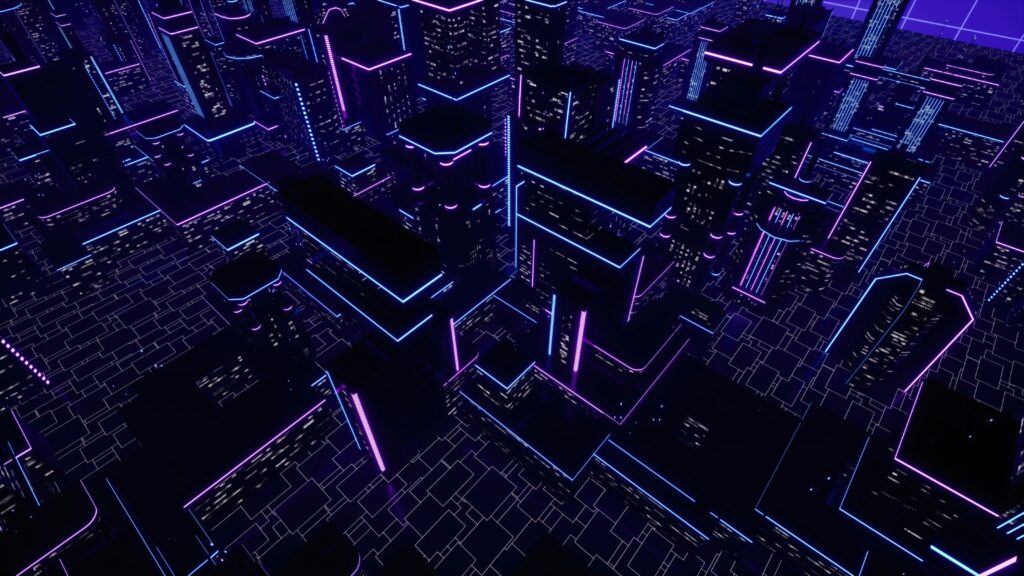
Several Citiverse projects are currently being developed across Europe. These initiatives explore how digital twin technologies – using real-time data, 3D visualisation, and AI – can support cities in planning, climate adaptation, traffic management, energy efficiency and citizen participation.
Some focus on technical infrastructure while others explore how digital twins can be used in everyday life – for example to simulate climate impact, understand energy flows or co-design public spaces with citizens.
Together, these projects aim to make digital city environments more accessible, useful and inclusive – not only for planners and professionals, but also for the people who live in, and move through, cities every day.
European Citiverses Uniting for Inclusiveness
European Citiverses Uniting for Inclusiveness is a collaborative innovation project co-funded by the European Union (in Sweden the project is also co-funded by Vinnova). The project brings together 12 partners from across Europe, working towards cities that are smarter, more inclusive and more human-centred.
Project partners
City of Gothenburg, Göteborg & Co, GATE, Kokokaka, Lindholmen Science Park, Iceberg+, Our Normal Association, RISE, The Point Labs, University of Twente, Virtuell Design and Younite.
To support inclusive and universal design from the outset, the project began with a user needs analysis aimed at grounding the work in real lived experiences. This report summarises the key insights from that initial research phase.
The research design and analysis were led primarily by Our Normal Association and RISE, with contributions from project partners.

Research Approach (summary)
Insights in this report are based on a triangulated research approach combining quantitative and qualitative methods:
- Survey analysis: analysed 200+ responses from families with children with disabilities, capturing experiences from site visits and public events.
- Empathy-driven research: interviews with 20 families, including 10 families with children with disabilities, representing diverse disability profiles and the use of assistive technologies.
- Real-world validation: dialogue input from 10 young adults and on-site visitor journey mapping at major public events in Gothenburg (Sweden).
- Literature review: thematic proxy review on inclusive tourism, accessibility and assistive technology in smart city contexts.
Read more: Barriers to Equal Access and Inclusion →