
New report: Ten themes for responsible and inclusive AI assistants – with a focus on neurodivergent youth
For many people, AI tools are simply a faster way to search for information or draft an email. For young people with cognitive and/or intellectual disabilities, they can mean much more: access to information that used to be out of reach, support that never runs out of patience, and a safe space to ask questions that feel too difficult to ask another person. At the same time, the risks are significant, including manipulation, misinformation and sensitive personal data ending up in the wrong hands. Possibilities and risks therefore need to be considered together, not in isolation.
The report is based on interviews with parents and guardians of young people aged 11 to 20 with neurodevelopmental conditions and/or intellectual disabilities, together with a review of current research. From this, we have identified ten themes for responsible and inclusive design of AI assistants:
- Enable personalisation and adaptation
- Support user autonomy and empowerment
- Offer multimodal and accessible interaction design
- Give non-judgmental support
- Provide structural support and simplified guidance
- Motivate and offer tireless support
- Design for natural pause and reflection
- Clarify that it’s a tool – like ‘a robot’
- Bridge to real-world interaction and connection
- Ethical safeguards and bias mitigation
Each theme concludes with concrete considerations for those designing, procuring or regulating AI tools. Much of what is needed for this particular group also makes AI assistants better for everyone, in line with the principle of universal design.
The report closes with a reflection on responsibility. When the same company both profits from engagement and data and is expected to protect its users, conflicts of interest are built into the system. As a thought model and a starting point for discussion, we therefore propose an ecosystem in which more actors take on responsibility – not instead of AI companies, but alongside them. After all, most of what is needed is not a matter of technical challenges, but of deliberate design choices.
The report is written by Jenny Lindström Beijar, Our Normal, and Anna Kolback, Studio Berget, as part of the EU co-funded project European Citiverses Uniting for Inclusiveness.
Want to know more? We’re happy to share our findings through a presentation or workshop. Get in touch at jenny@ournormal.org if you’d like to explore what these insights could mean for your organisation.
By AI assistants, we mean AI services and LLMs (large language models) that you can have a conversation with through text, voice or images – for example ChatGPT, Gemini, Claude, Copilot, Meta AI, Perplexity, Snapchat’s My AI or similar services.
Read and download the report
Links to the report
- Full report (pdf)
- Easy-to-read version (pdf)
- Full report “AI assistants and neurodivergent youth” as a text version – recommended for screen readers (pdf)
“For me, it quickly became clear that detailed information is important for many families.”
Who are you?
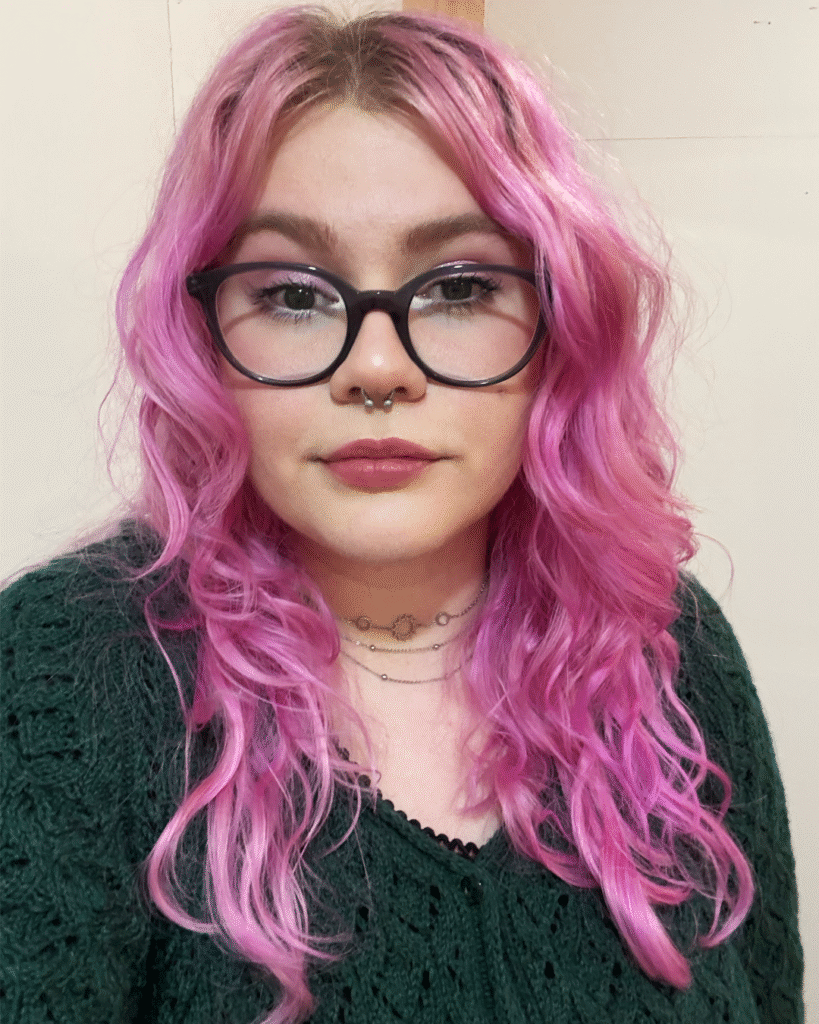
My name is Emilia and I work as a UX designer. UX stands for user experience. This means that I work to ensure that products and services, such as apps and websites, are usable and accessible for as many people as possible. I’ve always had an interest in both technology and people, and in my role as a UX designer I can create technical solutions in a way that meets users’ needs.
What is your role in the project?
In the CU project, I work with user testing, interviews, and design. Together with Our Normal, we apply universal design principles to make sure the solution is created in a way that as many people as possible can use it. Through interviews and user tests, we can understand visitors’ needs and any challenges they might face when planning for or attending an event. I can then use the information we collect when we build the solution we’re working on now.
In what ways do you believe the project can benefit society?
This project gives us the opportunity to listen to groups that previously haven’t had as much of a voice. If these groups gain access to the information they need, they can feel more confident when visiting a place. I also believe that more people might feel encouraged to attend an event or visit a location when they have access to more information in the planning stage, and that benefits society as a whole when more people can feel included.
What insights have you gained after participating in the initial user tests with Our Normal?
For me, it quickly became clear that detailed information is important for many families. Some information is even crucial for whether certain families can visit a place or not, such as access to an accessible restroom.
Many also found it intuitive to explore the digital twin themselves and make their own assessment of whether the place meets their needs.
The digital twin can also help motivate children to want to visit. It can be difficult to describe a place to a child – but if they get to explore and familiarize themselves with it before a visit, they gain a completely different understanding.
New report: Insights on universal design within Citiverse and digital twin technology
“I want to go there now!” is based on survey responses from more than 200 families with children with disabilities / a broad diversity of abilities, in-depth interviews with families and young people, and field studies conducted at public events. This forms the basis for identifying four main types of barriers:
- Attitudinal
- Physical
- Sensory
- Information-related
The report shows how factors such as a lack of information, uncertainty, and a high level of sensory input often lead to limited participation – despite a strong desire to be part of city life.
Based on these experiences, five areas are identified in which Citiverse and digital twin technology can make a difference:
- Preparation and planning
- Wayfinding and Navigation
- Communication and information
- Engagement and inclusion
- Adaptability and real-time responsiveness
“I want to go there now!” serves as a foundation for continued work within the EU funded project ‘European Citiverses Uniting for Inclusiveness’, and represents an important step toward more inclusive and equitable urban and event experiences.