
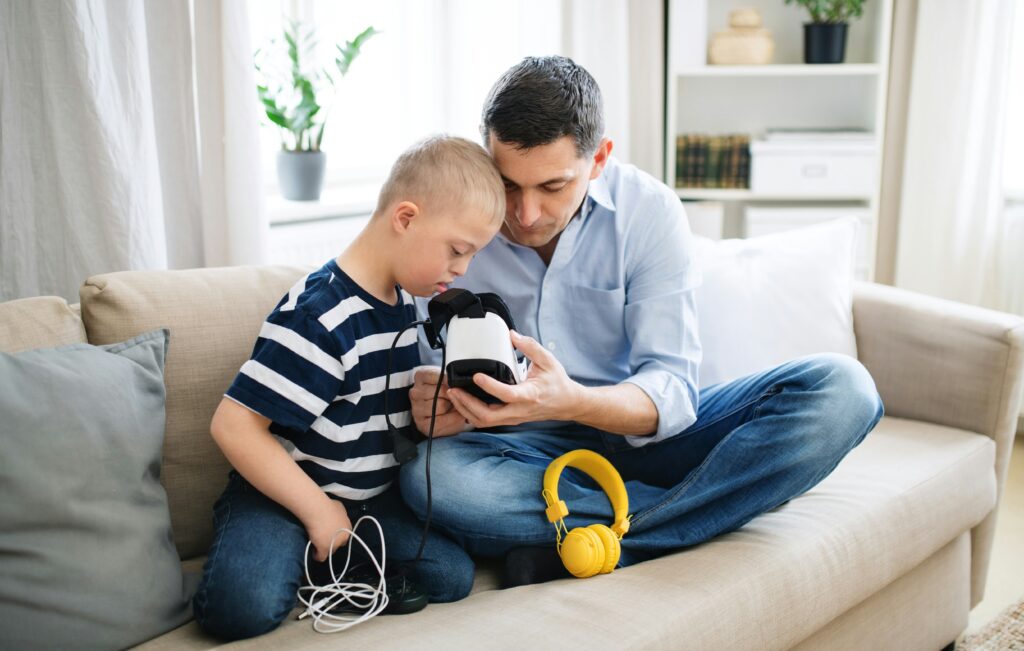
Opportunity space No. 1: Preparation and Planning – Building confidence through digital previews and structured preparation.
For many families, uncertainty is one of the biggest barriers to participation. Preparing for a visit – especially in unfamiliar environments – often requires detailed knowledge of routes, accessibility, sensory conditions and timing. Having the chance to explore a space virtually and understand what to expect can greatly reduce stress and make new experiences feel more manageable.
How Citiverse can help:
Digital twins of cities and venues can provide immersive previews, showing entrances, facilities, seating, lighting or crowd levels. Families can rehearse key moments such as arrival, navigation, or taking breaks
at their own pace. Event simulations can model crowd flows or safety procedures, helping families choose when and how to visit. VR experiences also allow children to become familiar with a place in a safe, controlled way.
These simulations can support staff training as well, helping organizations better understand diverse needs, improve service and reduce attitudinal barriers. Shared data standards and open APIs can make these tools accessible across cities and services.

Opportunity space No. 2: Wayfinding and Navigation – helping visitors move confidently through spaces, step by step.
Getting from one place to another can be a complex task when navigating with a child with different needs. Small obstacles – unclear signage, sudden changes, or a lack of structure – can make a big difference. Families need not only accurate directions but tools that guide them at their own pace and comfort level.
How Citiverse can help:
Ai supported accessibility navigation and real-time maps can guide families through unfamiliar environments with clear visual or auditory prompts. Smart infrastructure like IoT-enabled streetlights or indoor positioning systems can provide context-aware updates. For example: alerting users to elevator access, alternative routes or safe, quiet zones.
A key example is wheelchair-accessible wayfinding, where families can get step-by-step guidance along verified accessible routes, avoiding stairs,
curbs, steep slopes or narrow entrances.
AR navigation and or wearable technologies like smart glasses or headphones can offer hands-free guidance and support during movement.

Opportunity space No. 3: Communication and Information Access – delivering the right information in the right way, for everyone.
Access to relevant, clear, and trustworthy information is key – but many families struggle with overly generic, outdated or inaccessible communication. It is not only about having information available, but about receiving answers that match individual needs in a format that is easy to understand and act on.
How Citiverse can help:
AI-powered guides or assistants can deliver personalized, accessible information based on user preferences and needs – including preferred language, reading level or assistive technology. This can include simplified instructions, sign language videos or symbol-based guides.
Smart displays can help visitors access real-time guidance in physical spaces. Accessibility settings can ensure that different formats – audio, visual and easy-to-read content – are supported and easy to switch between depending on the situation.
Opportunity space No. 4: Engagement and Inclusion – making participation motivating, meaningful and socially shared.
For many children with disabilities, motivation plays a crucial role in participation. Exploring something new can be both exciting and overwhelming – and small nudges can make a real difference in building confidence. Inclusive digital experiences can help families feel more welcomed, curious and in control.
How Citiverse can help:
Interactive elements – such as simple challenges, rewards or progress tracking – can make visits more engaging and support exploration, independence and sustained interest. Immersive environments and digital storytelling can also help lower thresholds by making city and event visits feel more understandable and motivating.
At the same time, engagement should be designed with care. The goal is not endless or addictive experiences, but supportive interaction that helps people participate on their own terms – without creating stress, overuse or “never-ending” loops.

Opportunity space No. 5: Adaptability and Real-Time Responsiveness – responding to needs and changes as they happen.
Even with careful planning, real-life situations change. A closed entrance, a loud concert warm-up or a delayed bus can disrupt carefully made plans. For families managing complex needs, flexibility in the moment is essential.
How Citiverse can help:
IoT sensor networks can monitor real-time conditions – such as broken elevators, crowd density or noise levels – and feed that data into apps and maps families already use.
Real-time alerts can notify users of unexpected changes and suggest adaptive solutions, such as quieter routes or nearby amenities. AI agents can also learn from user behaviour and preferences to anticipate needs and make personalised recommendations in the moment – improving safety, comfort and confidence.

Read more: What’s next? →